Rental Property Sinking Fund: How to Budget for Major Replacements
A rental property sinking fund prevents major capital expenses from wiping out your monthly cash flow. Here is how to calculate monthly contributions based on asset lifespans.
Rental Property Sinking Fund: How to Budget for Major Replacements
The Math of an Untracked Roof: How Deferred CapEx Destroys Net Cash Flow
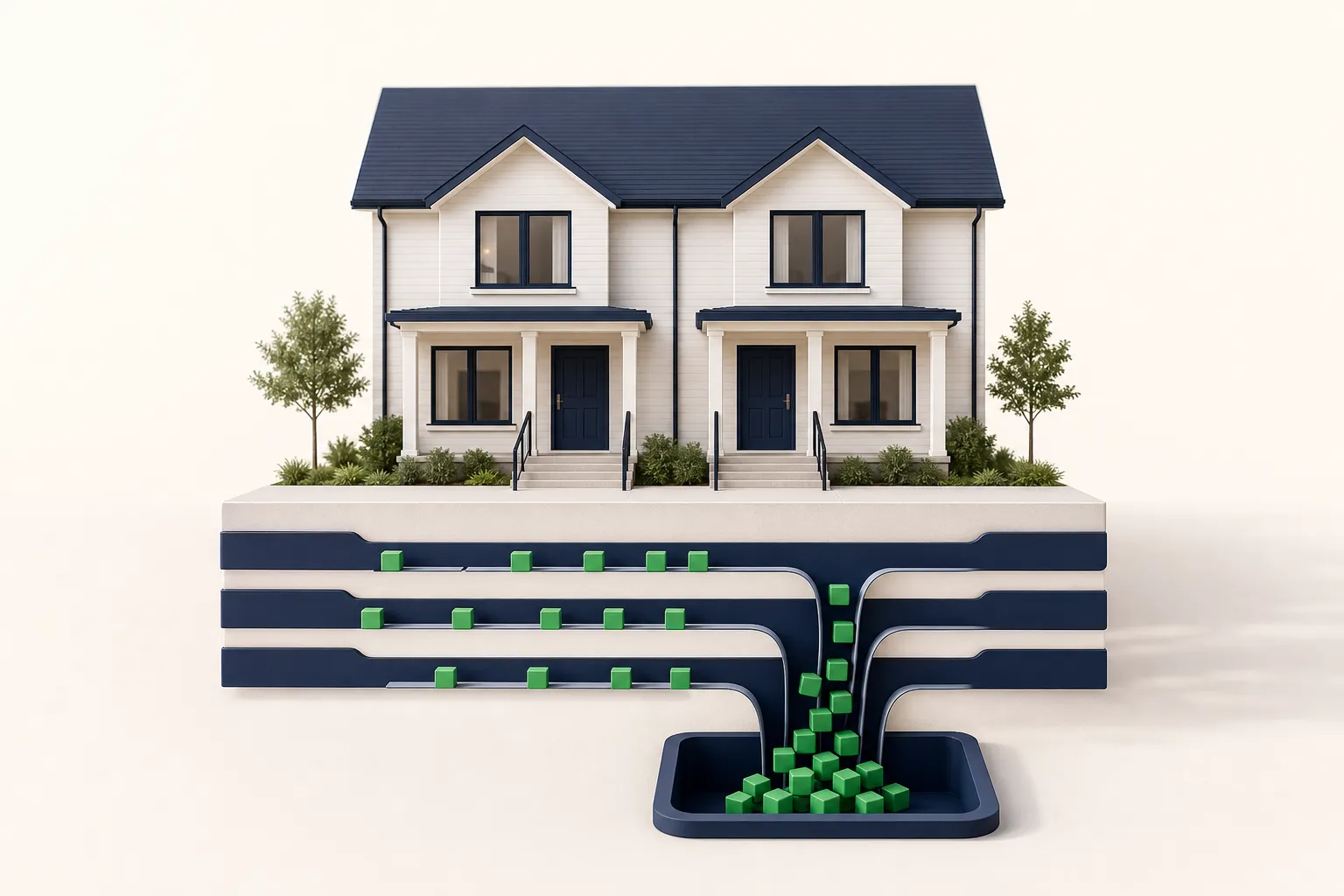
A rental property sinking fund is a dedicated savings balance accrued each month to pay for predictable, high-cost capital expenses (CapEx) before they fail. Instead of treating major repairs—like a $9,000 HVAC failure or a $12,000 roof replacement—as surprise financial emergencies, a sinking fund amortizes the cost of these components across their remaining useful life.
Consider a single-family rental that produces $400 per month in apparent net cash flow after paying the mortgage, property taxes, insurance, and routine repairs. Over four years, the owner collects $19,200 in accumulated cash flow. In year five, the property requires a new roof ($11,000) and a new central heat pump ($7,000). Total bill: $18,000.
In a single month, 94% of four years' worth of accumulated profit disappears. If the owner spent that $400 monthly cash flow along the way, they must now fund the replacement out of personal savings or high-interest debt.
Setting up a sinking fund prevents this by treating asset depreciation as an active monthly operating obligation rather than an unexpected crisis.
Sinking Funds vs. General Reserve Funds: The Difference
Landlords frequently confuse emergency cash reserves with capital sinking funds. While both sit in liquid bank accounts, they serve distinct operational functions.
- General Cash Reserves: A safety buffer designed for sudden, unexpected events. This covers tenant default, sudden extended vacancy, legal expenses, or emergency pipe bursts. Reserve funds are typically calculated as 3 to 6 months of gross operating expenses and mortgage payments. To learn more about setting this baseline, see our guide on how much cash to keep in your rental property reserve fund.
- Capital Sinking Funds: A targeted, itemized savings schedule for capital assets with predictable life expectancies. A roof does not fail unexpectedly; it deteriorates steadily over 20 to 25 years. A water heater does not surprise an investor when it reaches the end of its 10-year lifespan. Sinking funds turn guaranteed future capital replacements into predictable monthly line items.
Understanding the accounting difference between routine maintenance and capital improvements is also critical. Routine service calls (e.g., clearing a drain or replacing a thermostat) fall under operating expenses (OpEx), whereas asset replacements fall under capital expenditures (CapEx). You can read more about this distinction in our breakdown of CapEx vs OpEx for rental properties.
The Core Sinking Fund Calculation Formula
Calculating your monthly sinking fund allocation requires three data points for each major structural and mechanical component:
- Current Replacement Cost: The estimated total cost to replace the item today (including labor, materials, permits, and disposal).
- Expected Useful Life (Total Lifespan): The standard duration the item functions under normal rental conditions.
- Remaining Useful Life: The estimated number of years before the current item must be replaced.
The formula for an individual component is:
Monthly contribution = Estimated replacement cost / (Remaining useful life in years x 12)
To establish your total monthly sinking fund contribution for a property, you calculate the required monthly amount for each primary asset and add them together:
Total monthly sinking fund = Sum of all individual component monthly contributions
Component Lifespans and Replacement Cost Estimates
While replacement costs vary significantly by region, property size, and finish grade, common structural components follow standard lifespan ranges. Below are realistic planning figures for standard residential rental properties:
| Component | Typical Lifespan | Estimated Replacement Cost Range |
|---|---|---|
| Asphalt Shingle Roof | 20–25 years | $7,500 – $14,000 |
| HVAC / Heat Pump System | 12–15 years | $6,000 – $11,000 |
| Water Heater (Tank) | 8–12 years | $1,200 – $2,200 |
| Water Heater (Tankless) | 15–20 years | $2,500 – $4,500 |
| Kitchen Appliances (Set) | 8–12 years | $2,500 – $5,000 |
| Flooring (LVP / Tile) | 10–15 years | $3,500 – $7,500 |
| Flooring (Carpet) | 5–7 years | $1,800 – $3,500 |
| Exterior Paint / Siding Repair | 7–10 years | $3,000 – $6,500 |
| Driveway / Concrete Resurfacing | 15–25 years | $2,500 – $6,000 |
| Plumbing Fixtures / Re-pipe | 20–30 years | $2,000 – $8,000 |
Note: These figures serve as illustrative examples. Actual labor and material rates depend on local contractor pricing, permit fees, and property specifications.
Worked Example: Calculating a Property's Sinking Fund
Let’s look at a realistic example for a single-family home purchased as a long-term rental.
Property Details
- Purchase Date: Current Year
- Monthly Rent: $2,100
- Mortgage, Taxes, Insurance (PITI): $1,350
- Routine Maintenance & Management: $300
- Apparent Cash Flow (Pre-CapEx): $450
An inspection reveals the current age of key components. The landlord builds a sinking fund schedule based on remaining lifespan:
| Component | Estimated Cost | Total Lifespan | Age at Purchase | Remaining Life | Monthly Sinking Fund Formula | Monthly Target |
|---|---|---|---|---|---|---|
| Roof | $9,600 | 20 yrs | 12 yrs | 8 yrs (96 mos) | $9,600 / 96 | $100.00 |
| HVAC System | $7,200 | 15 yrs | 9 yrs | 6 yrs (72 mos) | $7,200 / 72 | $100.00 |
| Water Heater | $1,440 | 10 yrs | 6 yrs | 4 yrs (48 mos) | $1,440 / 48 | $30.00 |
| Kitchen Appliances | $3,000 | 10 yrs | 5 yrs | 5 yrs (60 mos) | $3,000 / 60 | $50.00 |
| Flooring (LVP) | $4,200 | 10 yrs | 3 yrs | 7 yrs (84 mos) | $4,200 / 84 | $50.00 |
| Total | $330.00 / mo |
The True Cash Flow Impact
Before accounting for capital replacement, the property appeared to generate $450 per month in cash flow:
- Gross Rent: $2,100
- Fixed & Operating Costs: -$1,650
- Unadjusted Cash Flow: $450
When the landlord sets aside the required $330 monthly sinking fund contribution:
- True Cash Flow: $450 - $330 = $120 / month
While $120 per month is lower than $450, it represents genuine, unencumbered profit. When the water heater leaks in year four, the $1,440 cash is sitting in the account ready to be deployed. The owner does not experience a negative cash flow month, nor do they dilute returns by charging the replacement to a high-interest credit card. You can run your own figures using our rental cash flow calculator.
What to Do When Assets Are Already Past Their Expected Life
One common problem small landlords encounter when buying older properties is acquiring assets that are already at or near zero remaining useful life.
For instance, if you purchase a rental with a 22-year-old roof (expected life: 20 years), the formula breaks down because remaining useful life is zero or negative.
In this scenario, you have three practical options:
- Fund from the Initial Capital Base: Budget the replacement cost as an immediate post-acquisition expense rather than funding it from monthly rent.
- Use an Accelerated 24-Month Sinking Fund: If the component is functional and shows no active leaks, set a tight 24-month target (e.g., $9,600 / 24 = $400/month) to build the capital reserve as quickly as possible.
- Prioritize by Risk: Allocate sinking fund contributions first to components that cause structural damage or habitability issues when they fail (roof, main sewer line, primary heat source), while deferring aesthetic capital items (flooring, cosmetic cabinetry).
Where to Hold Sinking Fund Balances
Capital sinking funds are not meant for daily operational transactions. To manage them effectively without administrative friction:
1. High-Yield Savings Accounts (HYSA)
Keep sinking funds in an interest-bearing, FDIC-insured account separate from your primary operating checking account. Earning interest on a $15,000 balance helps offset construction cost inflation over multi-year cycles.
2. Digital Ledger Allocation vs. Multiple Bank Accounts
If you own 3 to 10 units, opening separate bank accounts for every component on every property creates unnecessary administrative clutter. A simpler approach is maintaining one dedicated capital reserve account per property (or across your portfolio) and tracking individual sinking fund allocations within a spreadsheet or property profit dashboard.
3. Do Not Mix Sinking Funds with Tenant Security Deposits
Tenant security deposits are legal liabilities held in trust, not landlord assets. Sinking funds represent landlord capital. Never combine tenant deposits with your CapEx sinking funds, as doing so violates landlord-tenant regulations in many jurisdictions.
Adjusting Your Sinking Fund Over Time
A sinking fund schedule is not static. Perform a quick annual audit of your sinking fund table:
- When a replacement occurs: Once you spend $7,200 on a new HVAC system, reset that line item's remaining life back to 15 years (180 months). Your new monthly contribution for that item drops from $100 to $40 ($7,200 / 180), immediately freeing up $60 per month in cash flow.
- When replacement costs increase: If supply chain or labor costs rise locally, adjust your estimated total replacement cost upward by 5% to 10% to ensure your balance does not fall short.
- When an asset outlasts expectations: If a 10-year water heater reaches year 9 in excellent working condition, you can reduce or pause additional contributions once the account reaches the full $1,440 replacement target.
To see how your ongoing repair estimates compare to routine maintenance benchmarks, review our guide on how much to set aside for rental property maintenance.
Keep Sinking Funds Grounded in Operating Reality
Without a structured sinking fund, a rental property's apparent monthly cash flow is largely an illusion created by deferred maintenance. Factoring real asset lifespans into your monthly expense tracking ensures your portfolio produces sustainable profit, year after year.
Propertira tracks your property income, recurring costs, and one-off capital expenses across your entire portfolio in one clear dashboard—without connecting to your bank accounts or complicating your bookkeeping.
- sinking fund
- capex
- rental expenses
- cash flow
- property maintenance
Related guides
- HOA Fees on Rental Property: How Dues and Special Assessments Impact Cash FlowHOA fees directly reduce monthly rental profit, while sudden special assessments can wipe out an entire year of cash flow. Learn how to budget and evaluate association properties accurately.
- Should Landlords Pay Utilities? The Real Impact on Rental Cash FlowDeciding whether to include utilities in the rent directly affects your operating risk and net profit margin. Here is how to evaluate the cash-flow impact.
- Landlord Insurance Costs: What Drives the Premium and How to Budget ItLandlord insurance protects your rental property against damage and liability, but premiums can swing wildly. Here is what drives your policy costs and how to factor them cleanly into monthly cash flow.
Put this into practice
Use the free calculators with your own figures, or track every property in one place with Propertira.
Propertira provides estimates based on the information you enter. Results are for informational purposes only and are not financial, tax, legal or investment advice.